

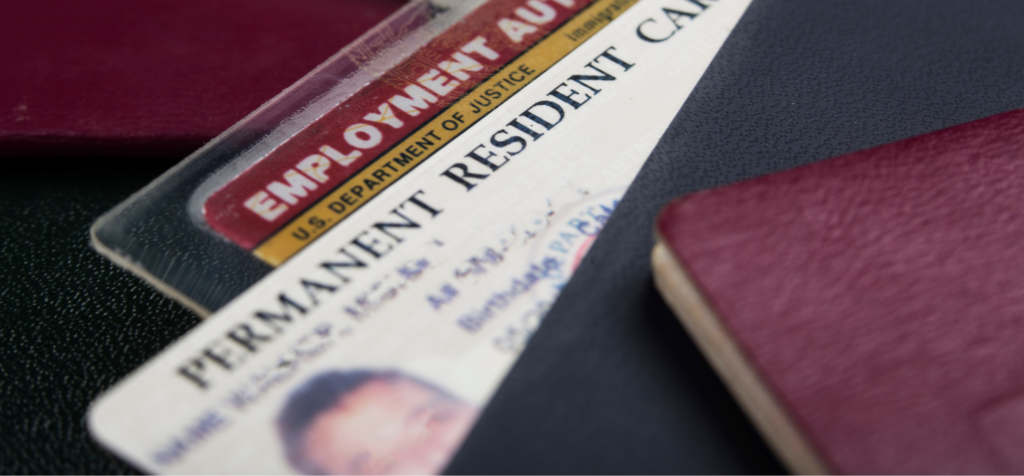
If you are eligible for a green card, one of the first decisions you will face is how to apply: from inside the United States or from abroad.
These are the two paths available — adjustment of status and consular processing — and while both lead to the same destination, they work very differently. Choosing the wrong path for your situation can result in delays, complications, or in some cases, serious immigration consequences.
Attorney Dylan Hackett, former Deputy District Attorney for San Mateo County, breaks down both options so you can make an informed decision before taking any action.
What Is Adjustment of Status?
Adjustment of status (AOS) is the process of applying for a green card while remaining inside the United States. Instead of leaving the country and going through a U.S. embassy or consulate abroad, you file your application with USCIS and attend your interview at a local field office.
For Bay Area applicants, this means your case is processed through the San Francisco USCIS Field Office.
Key form: I-485 (Application to Register Permanent Residence or Adjust Status)
Who can use it:
- Individuals who are physically present in the United States
- Individuals who entered the U.S. legally (with a valid visa, parole, or other authorized entry)
- Immediate relatives of U.S. citizens in most cases, even if they overstayed a visa
Main advantages:
- You stay in the United States throughout the process
- You can apply for work authorization (EAD) and travel permission (Advance Parole) while waiting
- One less international trip and consular interview to navigate
Main limitations:
- Not available to everyone — certain grounds of inadmissibility or unlawful entry can disqualify you
- Processing times at the San Francisco Field Office can be longer than national averages
What Is Consular Processing?
Consular processing is the path for individuals who are outside the United States, or who are not eligible to adjust status inside the country. Your green card application is handled through the National Visa Center (NVC) and then forwarded to a U.S. embassy or consulate in your home country, where you attend an immigrant visa interview.
Key forms: I-130 (filed by the U.S. petitioner) + DS-260 (immigrant visa application, filed by the applicant)
Who uses it:
- Individuals living abroad
- Individuals inside the U.S. who are not eligible for adjustment of status
- Some applicants who choose it for strategic reasons even when AOS is available
Main advantages:
- Available to applicants regardless of where they currently live
- In some cases, processing can be faster depending on the consulate and visa category
- May be the only option for those who entered without inspection or have certain immigration bars
Main limitations:
- Requires leaving the United States (or processing from abroad) — meaning separation from family during the process
- Triggering a departure can activate 3-year or 10-year unlawful presence bars if applicable
- Less control over timing once the case is at the consulate
Side-by-Side Comparison
Where you apply: Adjustment of Status → San Francisco USCIS Field Office Consular Processing → U.S. embassy or consulate in your home country
Where you must be: Adjustment of Status → Inside the United States Consular Processing → Outside the United States (or willing to depart)
Work authorization while pending: Adjustment of Status → Yes, through EAD (Form I-765) Consular Processing → No — you receive work authorization upon entry with your immigrant visa
Travel while pending: Adjustment of Status → Yes, with Advance Parole (Form I-131) Consular Processing → You are abroad, so travel is generally not restricted
Timeline (Bay Area): Adjustment of Status → 12–18 months (immediate relatives) Consular Processing → 12–24 months depending on country and consulate
Risk of departure: Adjustment of Status → Leaving without Advance Parole abandons your application Consular Processing → You must travel — departure may trigger bars if you have unlawful presence
Which Path Is Right for You?
The answer depends on several factors that an attorney must evaluate before you take any action.
You are likely a candidate for adjustment of status if:
- You are currently in the United States with valid immigration status
- You entered legally (with a visa, parole, or other authorized entry)
- You are an immediate relative of a U.S. citizen
- You want to remain in the U.S. and maintain work authorization while your case is pending
You are likely a candidate for consular processing if:
- You are currently living outside the United States
- You entered the U.S. without inspection and are not covered by INA § 245(i)
- You have been ordered removed or have a prior deportation on record
- Strategic considerations make consular processing more advantageous in your specific case
The situation requires careful attorney review if:
- You have any periods of unlawful presence in the U.S.
- You have a criminal record of any kind
- You have previously been denied a visa or immigration benefit
- You are unsure how you entered the United States
Attempting to adjust status when you are not eligible — or departing the U.S. without understanding the consequences — can trigger bars to reentry that take years to resolve.
Learn more about green card options →
A Note for Bay Area Applicants
The San Francisco Bay Area has one of the most diverse immigrant populations in the United States, with applicants from countries including Mexico, the Philippines, China, India, El Salvador, and many others.
Your country of birth affects your green card timeline significantly in preference categories — but does not generally affect whether you qualify for adjustment of status or consular processing. What matters most is your current location, how you entered the U.S., and your immigration history.
The San Francisco USCIS Field Office processes a high volume of adjustment of status cases. Interview scheduling typically runs 10–14 months after filing, with total processing averaging 12–18 months for immediate relatives.
For consular processing cases, the timeline depends on the specific U.S. embassy or consulate handling your case and the current workload in that country.
Learn more about family immigration options →
Common Questions
Can I switch from consular processing to adjustment of status? In some cases, yes. If you filed an I-130 petition and elected consular processing but later entered the U.S. and became eligible for adjustment of status, you may be able to switch. This requires careful timing and legal analysis. An attorney should evaluate your specific situation before you make any changes.
What if I entered the U.S. without a visa? If you entered without inspection (crossing the border without going through a port of entry), you are generally not eligible for adjustment of status — unless you qualify under INA § 245(i), which applies to certain individuals with petitions filed before April 30, 2001. Consular processing may be your only option, but departing the U.S. can trigger bars to reentry if you accrued unlawful presence. This is one of the most complex situations in immigration law and requires an attorney before you take any action.
Is one path faster than the other? It depends. For immediate relatives of U.S. citizens, adjustment of status at the San Francisco Field Office typically takes 12–18 months. Consular processing varies widely by country and consulate — some process faster, others slower. An attorney can give you a realistic timeline based on your specific case.
Can I work while my case is pending? If you are adjusting status, yes — you can apply for an Employment Authorization Document (EAD) once your I-485 is filed. If you are going through consular processing, you generally cannot work in the U.S. until you enter with your immigrant visa.
What happens if I travel outside the U.S. while adjusting status? Leaving the U.S. while your I-485 is pending without first obtaining Advance Parole (Form I-131) is considered an abandonment of your application. Always consult your attorney before any international travel.
Learn about marriage-based green cards →
Not Sure Which Path Applies to You?
The choice between adjustment of status and consular processing is one of the most consequential decisions in your immigration journey. The wrong path — or the wrong timing — can set your case back by years.
At Golden Gate Immigration Law, attorney Dylan Hackett reviews each case personally to identify the safest and most efficient path to permanent residence for clients across San Francisco, Oakland, San Jose, and the entire Bay Area.