

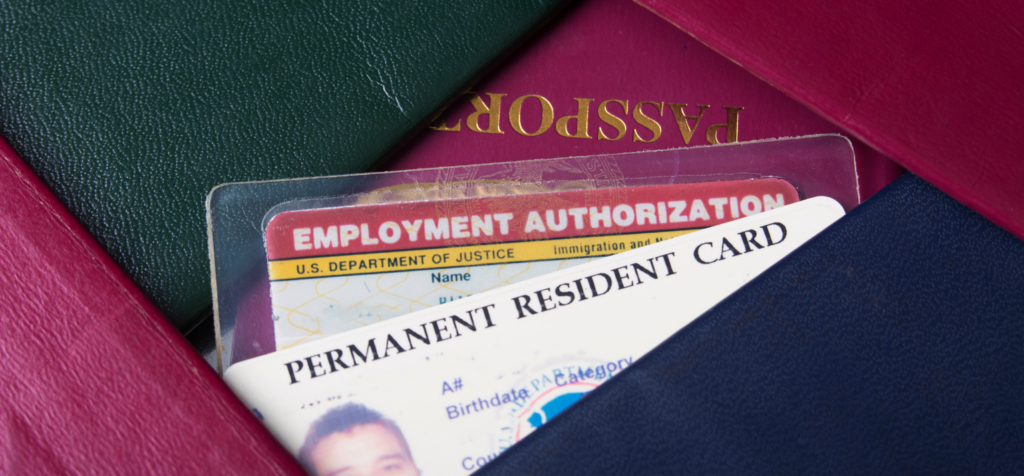
If you are applying for a green card in the San Francisco Bay Area, one of the first questions you will ask is: how long is this going to take?
The honest answer is: it depends. Green card timelines vary significantly based on your visa category, your country of birth, and whether you are applying inside the United States or through a U.S. consulate abroad.
What we can tell you is this — the San Francisco USCIS Field Office processes cases differently than national averages suggest, and knowing those local timelines can help you plan your life around a realistic expectation rather than a generic estimate.
In this guide, attorney Dylan Hackett breaks down the actual 2026 processing times for the most common green card categories in the Bay Area.
What Affects Your Green Card Timeline?
Before looking at specific numbers, it helps to understand the three factors that have the biggest impact on how long your case takes:
1. Your visa category Green cards are not all processed the same way. Immediate relatives of U.S. citizens (spouses, unmarried children under 21, parents) have no annual cap and are generally processed faster. Other family preference categories and employment-based categories are subject to annual visa limits, which can add months or years to the wait.
2. Your country of birth Applicants born in certain countries — including India, China, Mexico, and the Philippines — face significantly longer waits due to per-country visa backlogs. This affects employment-based and some family preference categories. Your country of citizenship does not matter — only your country of birth.
3. Adjustment of status vs. consular processing If you are already in the United States legally, you may be able to apply for your green card without leaving through a process called adjustment of status. If you are abroad, you will go through consular processing at a U.S. embassy or consulate. Both paths lead to the same result, but have different timelines and requirements.
San Francisco Green Card Timelines by Category (2026)
The following timelines reflect current processing at the San Francisco USCIS Field Office and through consular processing for Bay Area applicants. These are estimates based on current USCIS data — individual cases may vary.
Immediate Relative of a U.S. Citizen (Spouse, Child, Parent)
This is the fastest family-based green card category because there is no annual visa cap.
- Adjustment of status (inside the U.S.): 12–18 months
- Consular processing (abroad): 12–24 months
The San Francisco USCIS Field Office handles the interview for adjustment of status cases. Scheduling the interview is often the biggest source of delay — USCIS typically schedules interviews 10–14 months after filing.
Marriage-Based Green Card (Spouse of U.S. Citizen)
Marriage-based cases fall under the immediate relative category above. The most common additional delay is the marriage interview, where a USCIS officer verifies the marriage is genuine.
If you receive a Request for Evidence (RFE), your timeline can extend by 3–6 months. Strong initial documentation significantly reduces this risk.
Learn more about marriage-based green cards →
Family Preference Categories (Siblings, Married Children, etc.)
These categories are subject to annual visa caps and move according to the Visa Bulletin, published monthly by the U.S. Department of State.
- F2A (Spouse and children of LPRs): 2–3 years
- F1 (Unmarried adult children of U.S. citizens): 7+ years
- F3 (Married children of U.S. citizens): 12+ years
- F4 (Siblings of U.S. citizens): 14+ years
These are general estimates. Applicants born in Mexico or the Philippines face significantly longer backlogs in family preference categories.
Employment-Based Green Cards
Employment-based green cards depend heavily on your EB category and country of birth.
- EB-1 (Priority workers — no backlog for most countries): 12–18 months
- EB-2 / EB-3 (India): 10–50+ years due to severe backlogs
- EB-2 / EB-3 (China): 5–10+ years
- EB-2 / EB-3 (all other countries): 1–3 years
The Bay Area has a large population of employment-based applicants, particularly in the tech sector. If you are on an H-1B visa and your employer is sponsoring your green card, the timeline for Indian nationals is one of the most challenging situations in U.S. immigration law.
Citizenship & Naturalization (After Green Card)
Once you have your green card, you may be eligible to apply for U.S. citizenship after 5 years (or 3 years if married to a U.S. citizen).
Naturalization processing at the San Francisco USCIS Field Office currently takes 12–18 months from filing to the oath ceremony.
Learn more about citizenship & naturalization →
What Can Delay Your Green Card in San Francisco?
Even well-prepared cases can face delays. The most common causes we see at Golden Gate Immigration Law include:
Requests for Evidence (RFEs) USCIS issues an RFE when they need additional documentation to approve your case. Responding thoroughly and on time is critical — an incomplete response can result in denial. Having an attorney review your initial application significantly reduces the risk of an RFE.
Name check and background check delays All applicants undergo FBI name checks and biometric screening. In rare cases, these checks trigger additional review that can add months to the timeline.
USCIS Field Office interview backlogs The San Francisco USCIS Field Office serves one of the largest immigrant populations in the country. Interview scheduling backlogs are common, particularly for adjustment of status cases.
Visa Bulletin retrogression For preference category applicants, the Visa Bulletin can move backward, freezing cases for months. This is unpredictable and outside anyone’s control — but an attorney can help you plan around it.
Incomplete or inconsistent documentation Missing documents, inconsistent dates, or conflicting information between forms are among the most common — and most preventable — causes of delay.
Can You Speed Up Your Green Card Case?
In some situations, yes. Here are the main options:
Premium Processing (employment-based only) USCIS offers premium processing for certain employment-based petitions (I-140) for a fee of $2,805 (as of 2026). This guarantees a response — not necessarily an approval — within 15 business days.
Expedite Requests USCIS may expedite a case based on severe financial loss, urgent humanitarian reasons, or USCIS error. These requests are evaluated case by case and are not guaranteed. An attorney can help you determine if you qualify and how to make the strongest possible request.
Responding Quickly to RFEs You have a set deadline to respond to an RFE. Responding quickly and completely — rather than waiting until the deadline — can keep your case moving faster through the queue.
How an Immigration Attorney Can Help
Green card timelines are not just waiting — they involve dozens of forms, supporting documents, deadlines, and decisions that can accelerate or derail your case.
At Golden Gate Immigration Law, attorney Dylan Hackett — a former Deputy District Attorney for San Mateo County — reviews every case personally to identify the fastest and most legally sound path to permanent residence.
We handle green card cases for clients across San Francisco, Oakland, San Jose, and the entire Bay Area.
What we do for you:
- Identify your optimal green card category and path
- Prepare and review every form and document before filing
- Monitor your case and respond immediately to USCIS requests
- Prepare you for your USCIS interview
- Advise you on travel, work authorization, and other rights while your case is pending
Frequently Asked Questions
How long does adjustment of status take in San Francisco in 2026? Adjustment of status for immediate relatives of U.S. citizens currently takes 12–18 months at the San Francisco USCIS Field Office. This includes time for biometrics, background checks, and the interview scheduling backlog.
How long does consular processing take for a green card? Consular processing typically takes 12–24 months depending on the applicant’s country and the U.S. embassy or consulate handling the case. National Visa Center (NVC) processing adds approximately 3–6 months before the consular interview is scheduled.
Can I work while my green card is pending? Yes. If you filed for adjustment of status, you can simultaneously apply for an Employment Authorization Document (EAD) using Form I-765. Most applicants receive their EAD within 3–5 months of filing, allowing them to work legally while the green card is processed.
What is the current processing time at the San Francisco USCIS Field Office? As of mid-2026, the San Francisco USCIS Field Office is scheduling adjustment of status interviews approximately 10–14 months after the initial filing date. Total processing time from filing to green card approval averages 12–18 months for immediate relative cases.
Does hiring an immigration attorney make the process faster? An attorney cannot accelerate USCIS processing times directly, but can significantly reduce delays caused by incomplete applications, RFEs, and errors. A well-prepared case moves through the system more efficiently and with fewer interruptions.